Process Conditions for Fungal Alpha-Amylase
Fungal Alpha-Amylase is selected when processors need controlled starch breakdown in a moderate-temperature, mildly acidic process window. It is a practical enzyme for bakery systems, brewing adjunct conversion, cereal-based beverages, and starch-containing formulations where the target is improved fermentability, viscosity management, softer crumb, cleaner processing, or more consistent browning.
Unlike highly thermostable amylases used for aggressive liquefaction, Fungal Alpha-Amylase is valued for restraint. It performs well where starch has been hydrated or gelatinized enough to be accessible, then can be reduced or inactivated by downstream heat. That behavior gives formulation and production teams a useful control point: starch modification during the desired stage, not indefinitely.
Fungal Alpha-Amylase Solutions supplies fungal alpha-amylase in bulk to manufacturers, millers, brewers, distillers and the distributors who serve them. Send your process window with the quantity and destination, and we quote the grade that fits.
Wholesale and bulk supply for manufacturers, distributors and resellers. Every fungal alpha-amylase order is quoted individually. Request a quote with the application, the quantity you need and the destination country.
What the enzyme does in process
Fungal Alpha-Amylase is an endo-acting amylase. In practical terms, it cuts internal alpha-1,4 linkages in starch, reducing large starch molecules into shorter dextrins and fermentable carbohydrates. The production effect depends on substrate, water availability, temperature, pH, and residence time.
Common process outcomes include:
- Lower apparent viscosity in hydrated cereal or starch systems
- Improved fermentable sugar availability for yeast-driven systems
- More consistent dough handling when flour quality varies
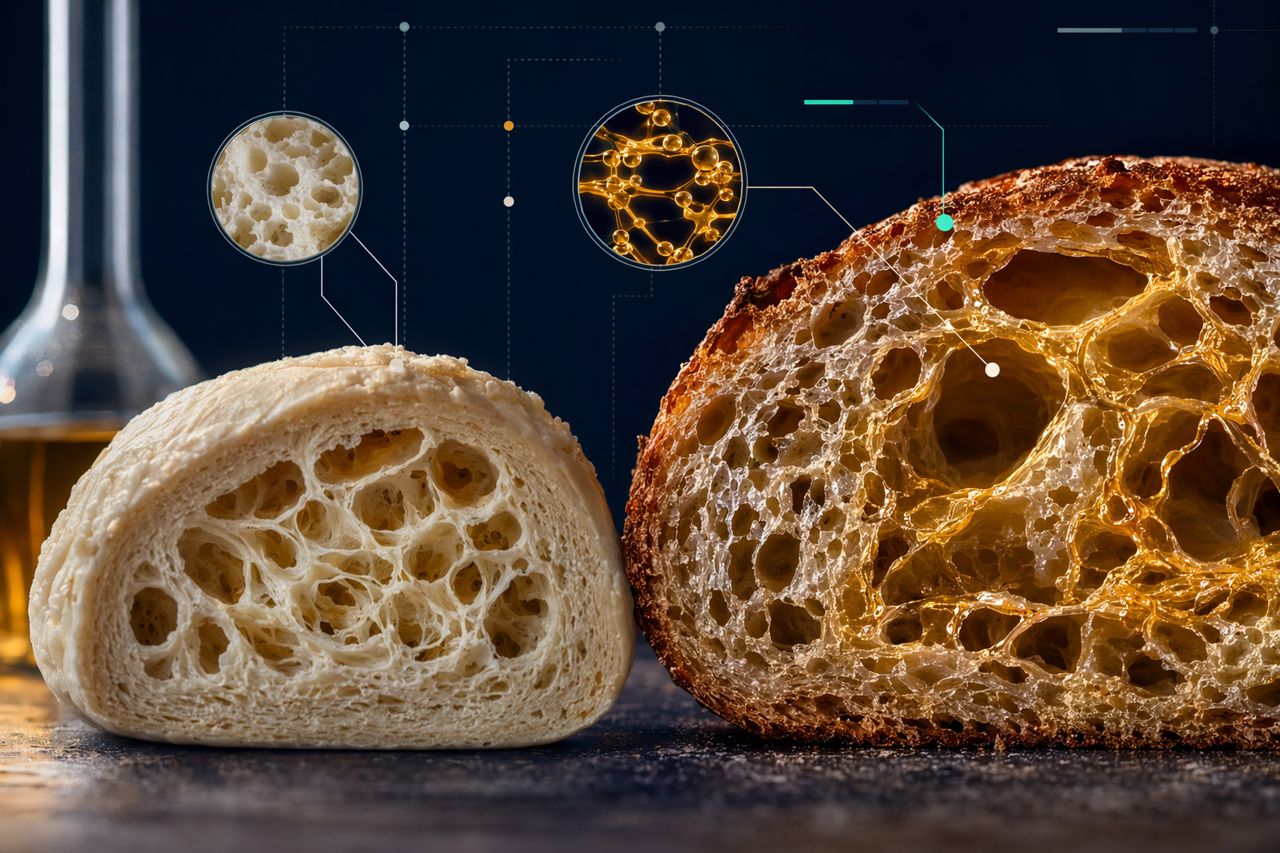
- Softer crumb and improved baked texture through controlled dextrin formation
- Better process repeatability in grain-based beverages and cereal preparations
- Reduced risk of over-conversion compared with more heat-stable amylase types
The main technical task is not simply adding the enzyme. It is placing it in the correct process window.
Recommended operating window
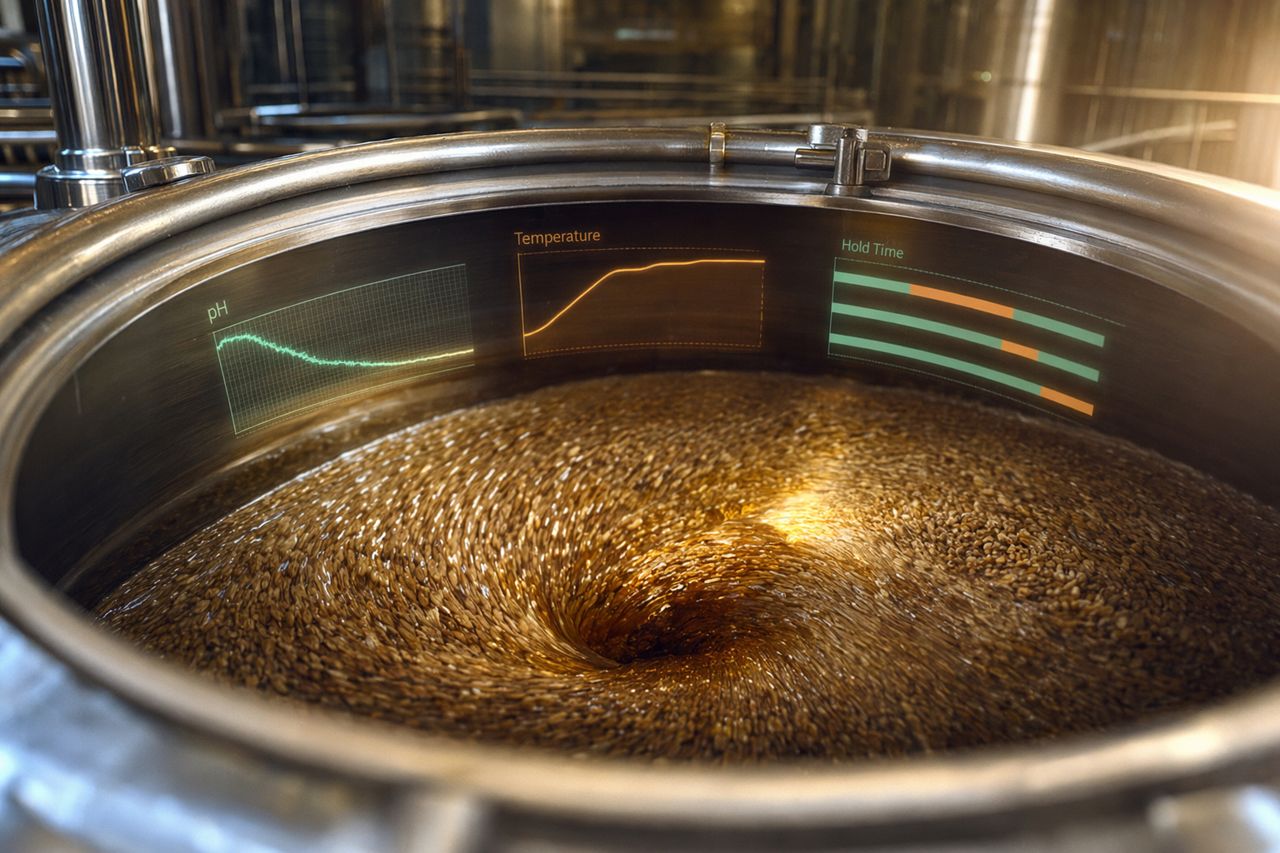
Fungal Alpha-Amylase is generally most useful in mildly acidic systems and moderate heat. Exact behavior depends on grade, substrate, and formulation matrix, but most process development starts within the ranges below.
| Parameter |
Practical guidance |
Why it matters |
| pH |
Start evaluation around pH 4.5–5.5 |
Supports strong activity in many grain, dough, mash, and beverage matrices |
| Temperature |
Screen around 45–60 °C where the substrate allows |
Balances enzyme performance with stability and starch accessibility |
| Moisture |
Ensure sufficient water for enzyme mobility and starch hydration |
Dry or low-water systems restrict contact between enzyme and substrate |
| Hold time |
Match the trial hold to real production residence time |
Conversion can continue until heat, pH shift, or formulation limits the enzyme |
| Substrate state |
Hydrated or gelatinized starch responds more readily |
Native or shielded starch may convert slowly or unevenly |
| Downstream heat |
Confirm inactivation behavior in the final process |
Prevents unwanted dextrin formation after the target stage |
These are starting conditions for process design, not substitutes for pilot confirmation. A bakery dough, a malt adjunct mash, and a cereal slurry may share the same enzyme but behave differently because water, starch damage, protein, lipids, minerals, sugars, and process shear all alter access to starch.
pH: mildly acidic systems are the natural fit
Fungal Alpha-Amylase is typically chosen for processes that sit below neutral pH. Many flour, malt, fruit-grain, and fermented systems operate in this region, making the enzyme a natural fit.
When pH is too low
At lower pH, the enzyme may lose performance or become less predictable. In acidic beverages or fruit-cereal systems, confirm activity under the final acid profile rather than testing only in water. Citric, lactic, acetic, and phosphoric acid systems can behave differently in real formulations.
When pH is too high
As the system moves toward neutral or alkaline conditions, Fungal Alpha-Amylase may become less efficient than other amylase types. If a process is naturally neutral and high-temperature, a different amylase class may be more appropriate. If the product requires a mild, grain-forward conversion with controlled heat sensitivity, Fungal Alpha-Amylase remains worth screening.
pH adjustment guidance
- Measure pH at the actual process temperature when possible.
- Check pH after flour, malt, syrup, salt, or acid additions—not only in the water phase.
- Avoid making pH corrections based on bench water trials alone.
- Confirm final pH impact on flavor, fermentation, and label requirements.
Temperature: use enough heat to expose starch, not so much that control is lost
Temperature affects both starch accessibility and enzyme stability. In many cereal systems, starch becomes easier to attack as it hydrates, swells, or gelatinizes. However, excessive heat can reduce Fungal Alpha-Amylase performance before the desired conversion is complete.
A practical development approach is to screen the enzyme across a moderate temperature range, then choose the point that gives the required viscosity, sugar release, dough behavior, or bake response within the actual residence time.
Typical temperature considerations
- Bakery doughs: The enzyme acts during mixing, floor time, proofing, and early baking until heat reduces activity.
- Mashing and cereal slurries: Activity depends on the temperature profile, starch gelatinization behavior, and hold time.
- Beverage bases: Moderate heat can improve starch access, but flavor, protein stability, and haze targets may limit the process window.
- Heat-treated products: Pasteurization, baking, or cooking can help terminate enzyme action when properly validated.
Do not assume that higher temperature always means faster or better conversion. If the enzyme denatures too early, total conversion may be lower than at a more moderate temperature.
Hold time: the quiet variable that changes everything
Fungal Alpha-Amylase does not work only at the moment of addition. It continues acting while pH, temperature, water, and substrate remain favorable. For production teams, residence time is often the variable that separates a controlled process from a drifting one.
Short holds may produce modest dextrin formation and small handling improvements. Longer holds can produce greater viscosity reduction, higher fermentable carbohydrate release, and more pronounced texture effects. In bakery, excessive action may weaken structure or create unwanted stickiness. In beverage or cereal slurry systems, over-conversion may shift mouthfeel, sweetness perception, filtration behavior, or solids management.
Practical hold-time controls
- Add the enzyme at a repeatable process step.
- Track time from enzyme addition to heat inactivation or pH shift.
- Validate the longest likely production hold, not only the nominal hold.
- Include line delays, tank staging, proofing variation, or thermal ramp time in trials.
- Define a sensory and processing endpoint, not only a time endpoint.
Application-specific process notes
Bakery and flour-based systems
In bread, buns, rolls, tortillas, laminated dough, and sweet baked goods, Fungal Alpha-Amylase supports controlled starch modification. The resulting dextrins and sugars can assist fermentation, crust color, crumb softness, and eating quality.
Key variables:
- Flour quality and starch damage
- Dough absorption and mixing intensity
- Sugar, salt, fat, and emulsifier levels
- Yeast activity and proof time
- Baking profile and internal product temperature
- Desired shelf-life and crumb resilience
Use caution in high-sugar or high-fat doughs where water availability is reduced. In these systems, the same nominal enzyme addition may act differently because less free water is available for enzyme mobility.
Brewing, distilling, and grain conversion
In brewing and adjunct processing, Fungal Alpha-Amylase can support starch breakdown where a moderate, acidic conversion profile is desired. It may be used to improve extract development or assist conversion of cereal adjuncts, depending on the mash design.
Key variables:
- Adjunct type and particle size
- Malt enzyme contribution
- Mash pH and mineral profile
- Temperature ramp and rest schedule
- Lautering or filtration target
- Fermentation profile and final attenuation goals
Where high-temperature liquefaction is required, processors may pair process stages with different enzyme types. Fungal Alpha-Amylase is often most valuable in the controlled conversion portion of the process rather than the most severe heat stage.
Cereal beverages, plant-based systems, and slurry processing
For oat, rice, barley, wheat, and mixed-cereal bases, Fungal Alpha-Amylase can help manage viscosity and solids behavior. The aim is often a smoother process, less gel formation, and a more stable texture profile.
Key variables:
- Grain type and starch composition
- Pre-cooking or gelatinization step
- Homogenization and shear
- Soluble fiber and beta-glucan contribution
- Sweetness target and flavor release
- Thermal treatment after conversion
In plant-based beverages, amylase conversion can change more than viscosity. It may influence sweetness perception, body, heat stability, and sedimentation. Trials should evaluate finished product behavior after the full thermal and packaging sequence.
Matrix factors that can shift performance
A process window is only meaningful inside the real formulation. The following variables can shift Fungal Alpha-Amylase performance even when pH and temperature appear correct.
Water availability
Enzymes require mobility. High solids, high sugar, syrups, fats, and dry dough systems can restrict access. If conversion is lower than expected, water distribution may be the cause.
Salt and minerals
Salt can affect dough rheology, water activity, and yeast behavior. Minerals can influence pH buffering and process consistency. Evaluate the enzyme in the complete formulation rather than in a simplified starch dispersion.
Protein, fiber, and lipid structure
Starch may be physically protected by protein networks, fiber, or lipid complexes. Milling, cooking, shear, and hydration time may change how accessible the starch is to the enzyme.
Thermal history
Pre-cooked starch, damaged starch, raw starch, and retrograded starch do not respond the same way. If raw material sourcing changes, repeat confirmation trials may be needed.
Inactivation and downstream control
One reason production teams select Fungal Alpha-Amylase is that its activity can often be reduced during baking, cooking, or pasteurization. This is useful where the processor wants conversion to stop before the product is packed, cooled, or stored.
However, do not treat inactivation as automatic. The real outcome depends on product geometry, heating rate, moisture, pH, and the coldest point in the product. A bread crumb, a filled pastry, a viscous cereal slurry, and a beverage hold tube each heat differently.
Validation should answer three questions:
- Has the enzyme delivered the target process effect before heat termination?
- Does downstream heating reliably reduce further starch breakdown?
- Does the finished product remain stable through shelf-life testing?
Pilot trial design
A good trial isolates the practical operating window without overcomplicating the first screen.
Suggested development sequence
- Define the target outcome. Examples: lower mash viscosity, softer crumb, improved fermentation support, cleaner pumping, or controlled sweetness development.
- Run a small process matrix. Vary pH, temperature, and hold time around the expected production condition.
- Use the real substrate. Test the actual flour, malt, grain, syrup, or slurry source.
- Include production stress points. Test long holds, slow heat-up, high solids, and raw material variation.
- Evaluate finished product quality. Processing data is not enough; check texture, flavor, appearance, stability, and packaging performance.
- Lock the addition point. The best enzyme result can drift if the addition step changes.
- Confirm cleaning and changeover. Prevent carryover into products where amylase action is not desired.
Procurement and specification alignment
For B2B sourcing, process fit matters as much as product identity. Before requesting pricing, prepare the information that allows technical and commercial teams to align the correct grade, pack size, and delivery format.
Useful request details include:
- Target application and product format
- Process pH and temperature profile
- Enzyme addition point
- Hold time before heat treatment or pH shift
- Substrate type and solids level
- Desired process or finished-product outcome
- Packaging preference and expected monthly demand
- Required documentation, such as specification, allergen statement, and food-grade compliance documents
Fungal Alpha-Amylase Solutions can support specification review, trial planning, and procurement alignment for Fungal Alpha-Amylase used in bakery, brewing, cereal, and grain-based processing.
Ready for a quote? Use the inquiry form at the foot of this page. Tell us the product or application, the quantity, your preferred format and the delivery country. We quote price and lead time per order and tell you which documents are available for that grade.
Request pricing or technical fit guidance
If you are setting process conditions, validating a new formulation, or comparing amylase options, send the process details below. The request goes directly to Fungal Alpha-Amylase Solutions for technical and commercial follow-up.
Go to the inquiry form
Key takeaway
Fungal Alpha-Amylase performs best when process conditions are deliberate: mildly acidic pH, moderate heat, adequate water, accessible starch, and a defined endpoint. Treat it as a controlled processing tool—not a generic additive—and it can deliver repeatable value in grain-forward manufacturing.