Fungal Alpha-Amylase Storage and Handling Guide
Fungal Alpha-Amylase is a formulation-sensitive processing enzyme used where controlled starch breakdown matters: dough conditioning, fermentable sugar development, viscosity reduction, and malt or cereal-based processing. Good performance starts before dosing. Storage temperature, moisture control, container hygiene, and disciplined transfer practices all affect consistency from lot to lot.
This guide is written for purchasing, QA, warehouse, and production teams evaluating how to receive, store, and handle Fungal Alpha-Amylase in an industrial environment.
It applies equally to distributors and resellers who hold stock before it reaches the end user. Fungal Alpha-Amylase Solutions supplies fungal alpha-amylase in bulk, quoted per order.
Wholesale and bulk supply for manufacturers, distributors and resellers. Every fungal alpha-amylase order is quoted individually. Request a quote with the application, the quantity you need and the destination country.
What Fungal Alpha-Amylase needs from your operation
Fungal Alpha-Amylase is designed to hydrolyze starch under moderate processing conditions. Like most industrial enzymes, it is stable when stored correctly and vulnerable when exposed to heat, moisture, contamination, or repeated open-close handling.
The goal is simple: keep the enzyme sealed, cool, dry, traceable, and protected until it enters a validated production step.
Recommended storage conditions
Always follow the product-specific technical data sheet and certificate of analysis supplied with the material. For most commercial Fungal Alpha-Amylase formats, the storage priorities are:
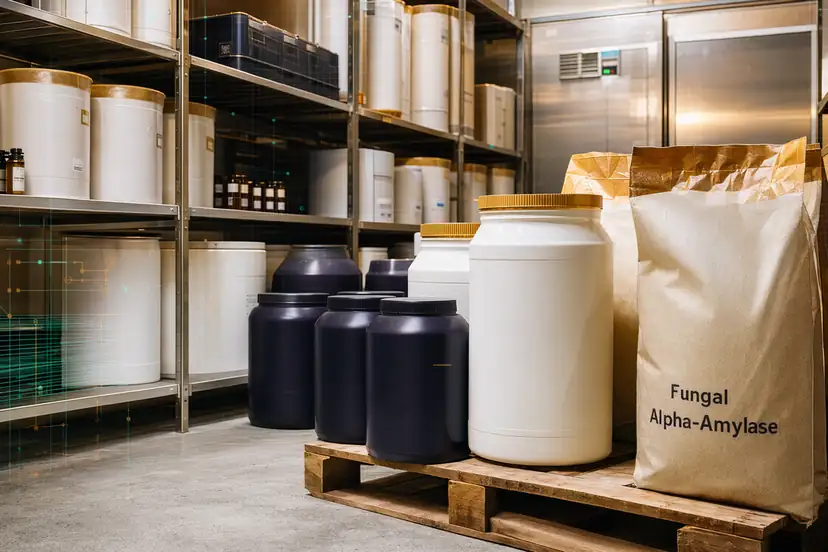
- Cool, controlled storage: Avoid warm rooms, direct sun, steam lines, hot mezzanines, and production areas with large temperature swings.
- Dry environment for powders: Keep powder formats away from humid air, washdown zones, ingredient mist, and condensation.
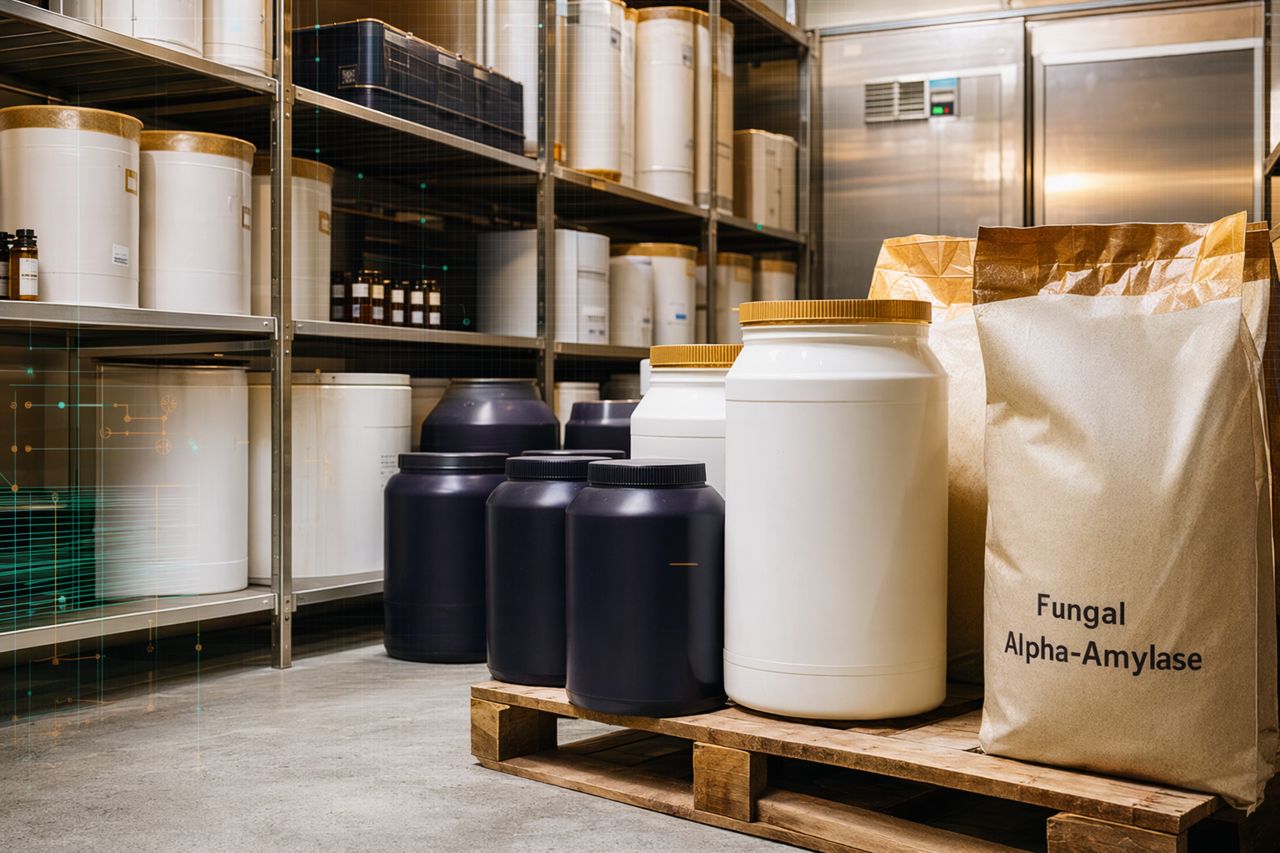
- Original sealed packaging: Store unopened containers in their original drums, bags, pails, or liners until required for production.
- No freezing unless specified: Liquid formats should not be frozen unless the product documentation explicitly allows it.
- FIFO or FEFO rotation: Use first-in-first-out or first-expired-first-out inventory control to avoid long dwell times.
- Segregated enzyme storage: Keep enzyme materials separate from strong oxidizers, sanitizers, acids, alkalis, solvents, and odor-active ingredients.
Receiving checklist for purchasing and QA
When a lot arrives, confirm the basics before releasing it to production:
- Container integrity: No broken seals, punctures, swelling, leakage, wet cartons, or compromised liners.
- Lot identity: Product name, lot number, net weight, and documentation match the purchase order.
- Transport condition: No evidence of heat exposure, freezing damage, water ingress, or rough handling.
- Documentation: Certificate of analysis, safety data sheet, allergen statement if applicable, and any food-grade or regional compliance documents required by your plant.
- Quarantine status: Hold material until QA release, especially when enzyme lots are linked to validated recipes or regulated product claims.
A short receiving hold is cheaper than a production deviation.
Powder handling: control dust and moisture
Powder Fungal Alpha-Amylase is efficient to ship and store, but it requires careful handling. Enzyme dust can be a respiratory sensitization risk, and moisture exposure can cause caking, uneven dispersion, or activity loss.
Practical powder-handling rules
- Open containers only when the line is ready to use the material.
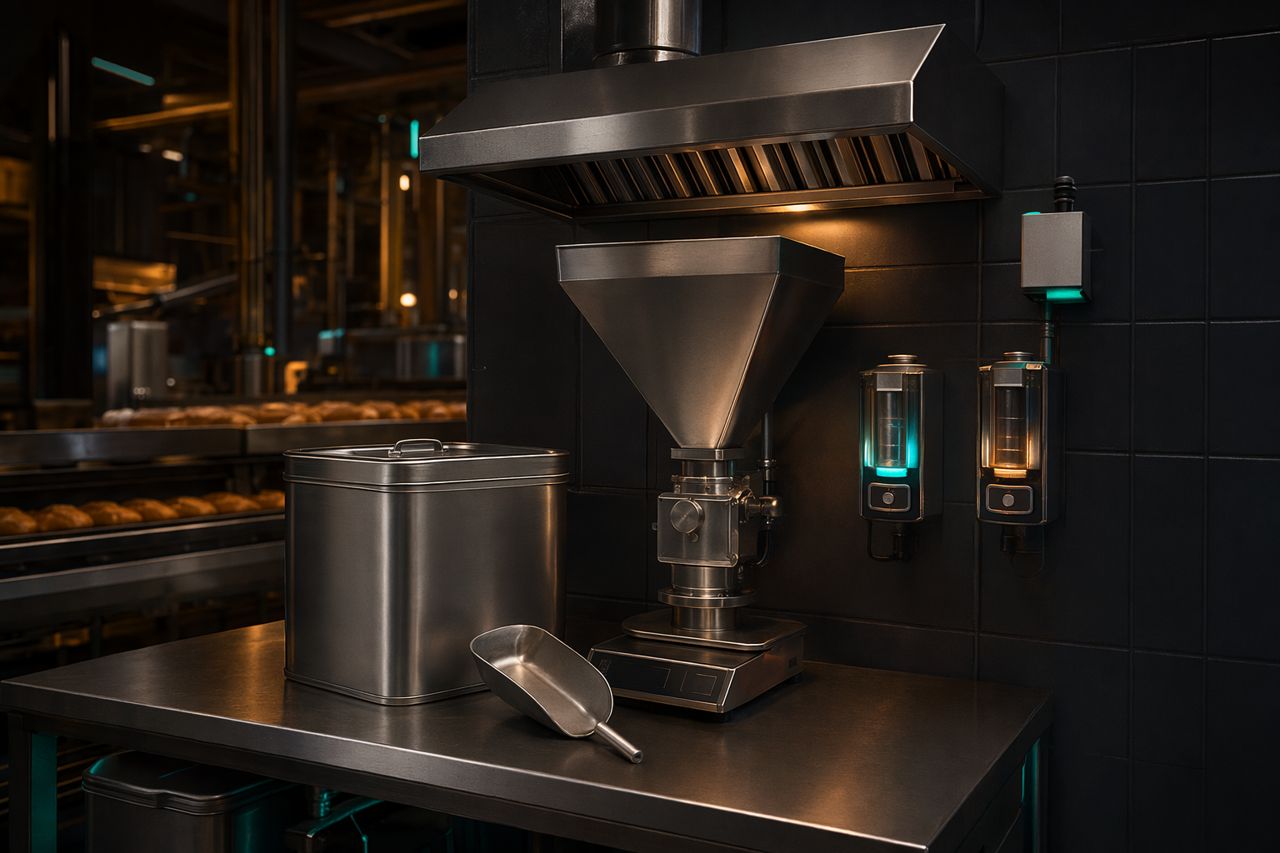
- Avoid dumping from height; use controlled transfer and local exhaust where appropriate.
- Keep scoops, weigh boats, and dosing hoppers dry and dedicated.
- Reseal liners immediately after partial use.
- Do not return unused exposed enzyme to the original container.
- Clean spills with low-dust methods; avoid dry sweeping.
- Use PPE defined by your site risk assessment and the product SDS.
For plants using micro-ingredient systems, verify that the enzyme powder flows consistently through the feeder and does not bridge, cake, or segregate from carrier materials.
Liquid handling: protect from heat, contamination, and dilution errors
Liquid Fungal Alpha-Amylase can simplify dosing and dispersion, but it needs clean transfer practice.
Practical liquid-handling rules
- Keep containers closed between transfers.
- Use clean pumps, hoses, and fittings compatible with the formulation.
- Avoid prolonged exposure to warm process rooms.
- Prevent backflow from process streams into enzyme containers.
- Do not dilute bulk enzyme unless the diluted solution will be used promptly under validated conditions.
- Label any day tanks or diluted solutions with product name, lot, preparation time, and operator.
If a diluted enzyme solution is used, establish a site-specific maximum hold time based on your microbiological controls and process validation.
Temperature and pH exposure during production
Fungal Alpha-Amylase is usually selected for moderate process windows, especially where cereal starch is being converted without harsh thermal treatment. Performance depends on recipe composition, water availability, starch source, process pH, temperature profile, and contact time.
In production terms:
- Too cold: reaction may be slow or incomplete.
- Within the target window: starch breakdown is predictable and useful.
- Too hot or too long at elevated temperature: enzyme can lose function.
- Incorrect pH: performance may drift, even if temperature is controlled.
Treat the enzyme as a processing tool, not a commodity additive. Lock the operating window through plant trials and then protect it through batch records, dosing checks, and line discipline.
Reconstitution and premixing
For powder formats, some plants premix Fungal Alpha-Amylase into water or an ingredient slurry before dosing. This can improve distribution when done correctly.
Use these controls:
- Use clean potable or process-approved water.
- Avoid hot water unless approved in the product documentation.
- Add enzyme slowly with gentle mixing to reduce dust and clumping.
- Avoid high-shear abuse unless the system has been validated.
- Dose the prepared solution promptly.
- Record preparation time, water quantity, lot number, and operator.
For bakery, brewing, and grain processing lines, enzyme distribution is often as important as total dose. Uneven dispersion can create visible quality variation even when the correct amount was weighed.
Shelf life and partial containers
Shelf life is product- and format-specific. Use the date and storage requirements stated on the product documentation.
For partial containers:
- Minimize headspace exposure.
- Reseal liners and closures tightly.
- Keep the container in the approved storage area, not beside the line.
- Mark the first-opened date.
- Use opened containers before unopened stock when quality rules permit.
- Dispose of material that shows unusual odor, discoloration, wetting, clumping, leakage, gas formation, or container damage.
Do not blend old and new lots unless your QA program has explicitly approved that practice.
Plant safety considerations
Fungal Alpha-Amylase should be handled under a documented enzyme safety program. Key elements include:
- SDS review and employee training.
- Respiratory and eye protection where risk assessment requires it.
- Local exhaust or enclosed transfer for dusty steps.
- Spill-response procedures that reduce aerosol generation.
- Dedicated tools and clear labels.
- Washdown controls that prevent enzyme residues from spreading to walkways or unrelated production areas.
If your site already handles other enzymes, confirm that Fungal Alpha-Amylase is included in the same occupational hygiene controls.
Common storage and handling mistakes
Avoid these preventable causes of inconsistency:
- Keeping enzyme on the production floor for convenience.
- Opening drums before the batch is ready.
- Using wet scoops or wet dosing hoppers.
- Storing next to steam, ovens, boilers, or CIP chemical areas.
- Leaving liquid containers uncapped during shift change.
- Diluting enzyme for later use without a validated hold time.
- Assuming two enzyme formats behave the same in the feeder or slurry system.
- Changing lot, dose point, or premix method without documenting the change.
Specification and procurement notes
When sourcing Fungal Alpha-Amylase, ask for documentation that fits your production environment, not just a headline enzyme name. Useful procurement information includes:
- Physical format: powder, granulated powder, or liquid.
- Food-grade or technical-grade suitability.
- Recommended storage range.
- Declared shelf life under stated conditions.
- Carrier or stabilizer information where disclosure is available.
- Allergen, GMO, kosher, halal, or regional compliance statements if required.
- Packaging options aligned with your batch size and dosing system.
- Lot traceability and certificate availability.
Fungal Alpha-Amylase Solutions can help match Fungal Alpha-Amylase format and handling expectations to bakery, brewing, cereal, and starch-processing workflows.
Quick reference: do and do not
Do
- Store sealed, cool, dry, and traceable.
- Use FIFO or FEFO inventory rotation.
- Keep powder handling low-dust and moisture-controlled.
- Keep liquid transfer systems clean and closed.
- Validate dosing, dispersion, temperature, pH, and contact time in your process.
- Train operators on enzyme-specific safety controls.
Do not
- Store near heat, humidity, sanitizers, or strong chemicals.
- Leave containers open between uses.
- Return exposed material to original stock.
- Dilute and hold without validation.
- Assume performance is unchanged after poor transport or storage.
- Substitute formats without feeder or process checks.
Ready for a quote? Use the inquiry form at the foot of this page. Tell us the product or application, the quantity, your preferred format and the delivery country. We quote price and lead time per order and tell you which documents are available for that grade.
Request pricing or storage guidance
If you are specifying Fungal Alpha-Amylase for a production line, share your application, format preference, packaging target, and storage constraints. Fungal Alpha-Amylase Solutions will respond with product-fit guidance and pricing through this site’s own quote workflow.
Go to the inquiry form