Fungal Alpha-Amylase vs Bacterial Alpha-Amylase
Fungal Alpha-Amylase and bacterial alpha-amylase both hydrolyze starch, but they do not behave the same in production. The practical difference is not only biological origin. It is the way each enzyme fits into temperature, pH, substrate, hold time, and finished-product goals.
For formulation and process teams, the choice usually comes down to this question: do you need controlled starch modification in a moderate-temperature, mildly acidic process, or do you need robust liquefaction under hotter, more aggressive conditions?
Fungal Alpha-Amylase is typically selected when the process needs gentle, predictable dextrinization and fermentable sugar development without pushing the system into high-temperature liquefaction. Bacterial alpha-amylase is often selected when starch slurry viscosity must be reduced at higher temperatures or under more industrial liquefaction conditions.
Fungal Alpha-Amylase Solutions supplies fungal alpha-amylase in bulk to manufacturers, millers, brewers and distributors. If you are unsure which type your process needs, send the process outline with the quantity and destination, and we tell you which grade fits before we quote.
Wholesale and bulk supply for manufacturers, distributors and resellers. Every fungal alpha-amylase order is quoted individually. Request a quote with the application, the quantity you need and the destination country.
The short answer
Choose Fungal Alpha-Amylase when you need:
- Controlled starch breakdown in bakery, brewing, cereal, and fermentation-adjacent processes
- Performance in mildly acidic to near-neutral systems
- Moderate process temperatures
- Improved dough handling, crumb development, browning, or fermentability
- A lower-risk enzyme profile where residual heat activity is not desired after baking or cooking
Choose bacterial alpha-amylase when you need:
- High-temperature starch liquefaction
- Strong viscosity reduction in starch slurries
- More thermal tolerance during cooking or jet-cooking style processes
- Industrial conversion where downstream saccharification or further enzyme steps are planned
Core technical difference
Both enzymes cleave internal alpha-1,4 glycosidic bonds in starch. That means both can reduce starch molecular size and generate shorter dextrins. The difference is how fast, how far, and under what processing conditions that hydrolysis occurs.
Fungal Alpha-Amylase generally works best in moderate thermal windows and is well suited to food systems where starch is only one part of a complex matrix: flour, malt, adjuncts, cereals, or blended dry mixes. Its value is control.
Bacterial alpha-amylase is more commonly used where heat tolerance and rapid viscosity reduction are more important than subtle finished-product effects.
Comparison table
| Attribute |
Fungal Alpha-Amylase |
Bacterial Alpha-Amylase |
| Typical origin |
Fungal fermentation, commonly Aspergillus-derived |
Bacterial fermentation, commonly Bacillus-derived |
| Process personality |
Controlled, moderate, formulation-friendly |
Robust, heat-tolerant, liquefaction-oriented |
| Temperature fit |
Moderate-temperature processing |
Higher-temperature processing |
| pH fit |
Mildly acidic to near-neutral systems |
Often broader, commonly neutral to slightly alkaline depending on grade |
| Primary use logic |
Dough conditioning, fermentable sugar support, cereal and brewing adjustment |
Starch slurry thinning, viscosity reduction, liquefaction |
| Finished-product influence |
Can affect crumb, color, fermentation, and texture |
Usually chosen for process conversion rather than sensory refinement |
| Heat inactivation profile |
Often easier to inactivate during baking or cooking |
Some grades remain active longer under heat |
| Best procurement question |
“How controlled is the hydrolysis in my product matrix?” |
“How much heat stability and viscosity reduction do I need?” |
Where Fungal Alpha-Amylase fits best
Bakery and flour systems
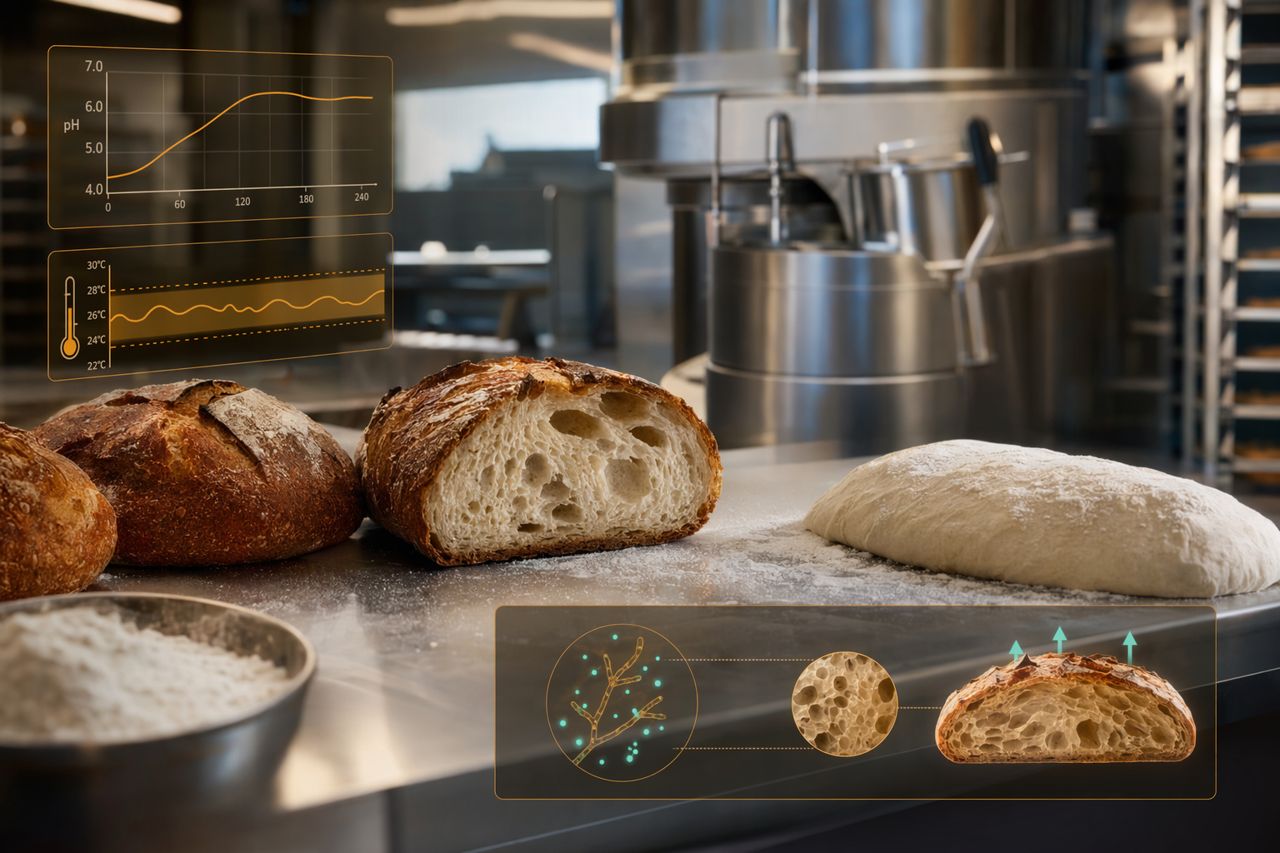
In bakery, Fungal Alpha-Amylase is used to help convert damaged or gelatinizing starch into smaller dextrins and fermentable sugars. The practical effects can include better yeast activity, improved crust color, more consistent oven spring, and a softer eating profile.
The important point is control. Too little amylase activity and the dough may under-ferment or bake pale. Too much, or the wrong heat-stability profile, and the crumb can become sticky or gummy. Fungal Alpha-Amylase is often preferred because it supports the bake without behaving like a high-temperature liquefaction enzyme.
Typical bakery use cases include:
- Bread and buns where fermentation consistency matters
- Flour correction when native amylase level is variable
- Frozen or retarded dough systems needing predictable sugar release
- Crackers, biscuits, and cereal-based products requiring starch management
- Enzyme blends for crumb softness, color, and processing tolerance
Brewing and malt-adjacent processing
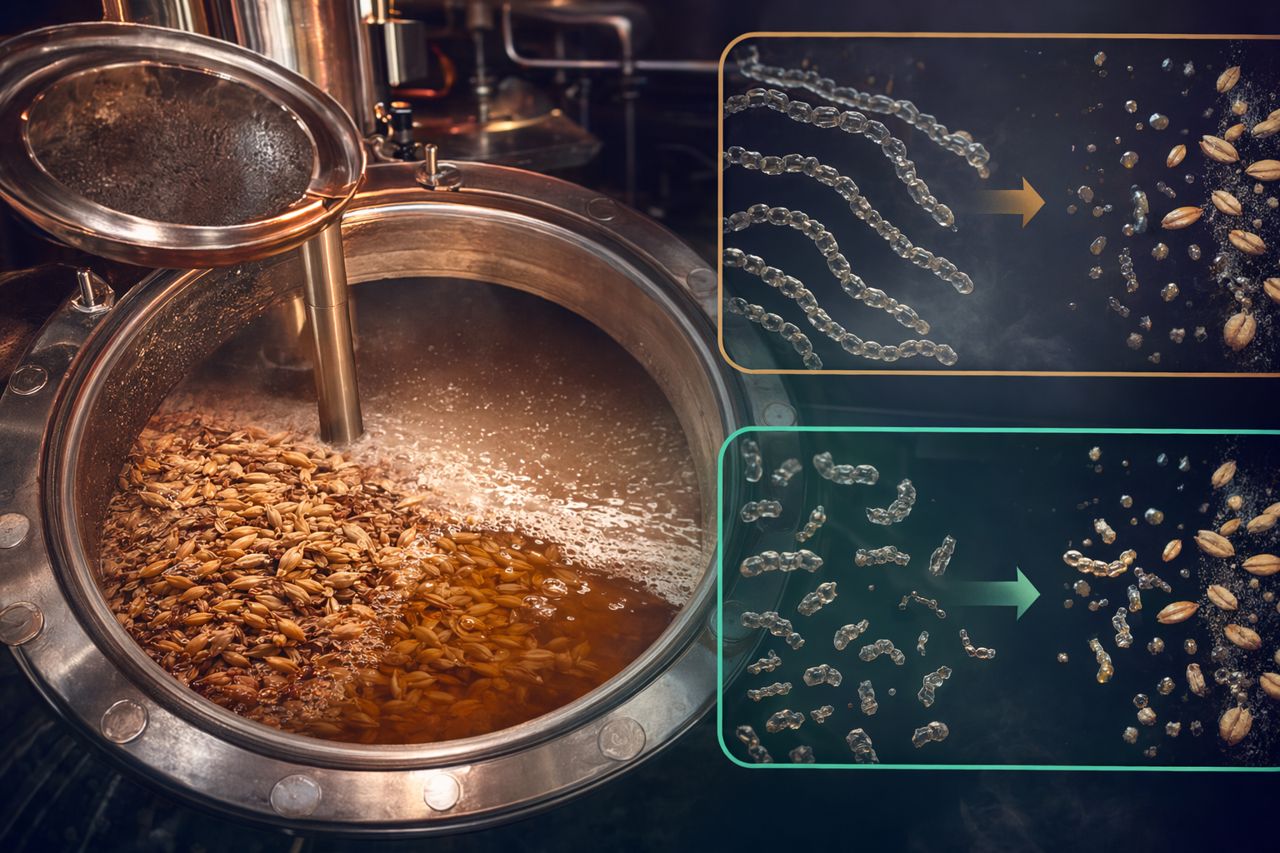
In brewing, malt naturally supplies amylolytic enzymes, but adjunct usage, malt variation, mash design, and process targets can create gaps. Fungal Alpha-Amylase can help support starch conversion and fermentable extract development under conditions that are compatible with many cereal and malt systems.
It is not simply a stronger version of malt enzyme activity. It should be selected around the mash profile, adjunct composition, pH, temperature rests, and desired carbohydrate spectrum.
Typical brewing and beverage use cases include:
- Adjunct mash support
- Cereal substrate conversion
- Fermentability correction
- Process consistency across raw-material variation
- Dry blend or liquid process aids where moderate-temperature activity is preferred
Fermentation substrates and grain processing
For fermentation substrates based on wheat, corn, rice, sorghum, barley, or mixed cereal inputs, Fungal Alpha-Amylase may be used where the process does not require aggressive high-temperature liquefaction. It can reduce starch complexity and support downstream fermentation without over-designing the process around thermal stability.
This is especially relevant when the substrate is not a pure starch slurry. Grain meals, flour slurries, cooked cereal bases, and blended nutrient streams often require enzyme behavior that is effective but not excessive.
Where bacterial alpha-amylase fits best
Bacterial alpha-amylase is often chosen for starch-heavy industrial processes where high solids, high heat, and rapid viscosity reduction are central to the operation.
It is a strong fit when the process goal is to open the starch structure quickly and prepare the stream for further conversion. In those cases, thermal stability is an advantage, not a risk.
Common bacterial alpha-amylase use cases include:
- Starch liquefaction
- High-temperature cereal slurry thinning
- Industrial sweetener production workflows
- Processes using cooked or gelatinized starch at elevated temperatures
- Operations where downstream saccharifying enzymes will complete conversion
Why the wrong choice creates process problems
The two enzyme classes can overlap on paper, but substitution can create real production consequences.
Using a bacterial alpha-amylase where Fungal Alpha-Amylase is expected may produce excessive starch thinning, extended heat activity, altered texture, or a carbohydrate profile that does not match the finished product. In bakery, this can show up as tacky dough, weak structure, gummy crumb, or inconsistent slicing.
Using Fungal Alpha-Amylase where bacterial alpha-amylase is required may leave viscosity too high, slow conversion, or underperform during hot liquefaction. In starch processing, that can reduce pumpability, conversion efficiency, and downstream consistency.
The correct enzyme is the one whose activity window matches the process, not simply the one with the same enzyme name.
Selection criteria for technical buyers
When specifying Fungal Alpha-Amylase or bacterial alpha-amylase, align the enzyme to the actual production environment.
Key questions to resolve:
- What is the substrate? Flour, whole grain, malt, purified starch, adjunct cereal, or blended formulation?
- When does starch gelatinize in the process? The enzyme must be active when starch becomes accessible.
- What is the process temperature profile? Moderate bake or mash conditions are different from high-heat liquefaction.
- What is the pH during the active phase? Enzyme fit should reflect the real system, not water-only assumptions.
- Is the goal dextrinization, fermentability, viscosity reduction, or texture control? These are related but not identical.
- Should the enzyme inactivate during heat treatment? Residual activity can be beneficial in one process and damaging in another.
- What variability exists in raw materials? Flour and grain inputs may require a narrower, more controllable approach.
Application guidance by industry
Bakery formulation
For bread, buns, rolls, tortillas, crackers, and laminated products, Fungal Alpha-Amylase is usually the more formulation-sensitive option. It can support fermentation and crust color while limiting the risk of excessive heat-stable starch attack.
Use bacterial alpha-amylase only when the grade is specifically designed and validated for the bakery use case. Many bacterial amylases are too heat-stable or too aggressive for delicate crumb systems.
Brewing and distilling
Fungal Alpha-Amylase can be useful when the process needs conversion support at moderate mash conditions. Bacterial alpha-amylase may be appropriate for adjunct cooking, high-temperature cereal processing, or upstream liquefaction before saccharification.
The right decision depends on whether the enzyme is expected to work in the main mash, in a cereal cooker, or in a separate liquefaction step.
Grain-based ingredients
For cereal ingredients, premixes, and dry-blend systems, Fungal Alpha-Amylase is often selected for its controlled behavior and compatibility with food formulation workflows. Bacterial alpha-amylase is more appropriate when the ingredient process includes a dedicated high-temperature starch breakdown stage.
Starch conversion
If the operation is primarily starch liquefaction, bacterial alpha-amylase is often the starting point. If the operation is food formulation with starch modification as one function among many, Fungal Alpha-Amylase is frequently the more practical first screen.
Procurement notes
When comparing suppliers, do not evaluate Fungal Alpha-Amylase and bacterial alpha-amylase only by label name. Request the practical information that affects production performance:
- Recommended application range by process type
- Thermal behavior and expected inactivation profile
- pH compatibility for the intended matrix
- Physical form and handling requirements
- Carrier and allergen considerations where relevant
- Regulatory and documentation package for your market
- Lot-to-lot consistency controls
- Compatibility with other enzymes, emulsifiers, oxidants, preservatives, or processing aids
For B2B procurement, the best specification is not the longest one. It is the one that connects enzyme behavior to your substrate, process window, and finished-product target.
Practical recommendation
If your process is bakery, brewing, cereal formulation, or moderate-temperature grain conversion, start with Fungal Alpha-Amylase unless you have a clear requirement for high-temperature liquefaction.
If your process is starch slurry thinning, cooked cereal liquefaction, or industrial conversion under elevated heat, evaluate bacterial alpha-amylase first.
Where the process sits between those two cases, the decision should be made through application testing against your real substrate and process profile.
Ready for a quote? Use the inquiry form at the foot of this page. Tell us the product or application, the quantity, your preferred format and the delivery country. We quote price and lead time per order and tell you which documents are available for that grade.
Request pricing or technical fit guidance
Fungal Alpha-Amylase Solutions supports B2B teams evaluating Fungal Alpha-Amylase for bakery, brewing, grain, and fermentation-adjacent applications. Share your substrate, process temperature profile, pH range, target effect, and preferred format. Our team will respond with a practical recommendation and pricing path.
Go to the inquiry form